
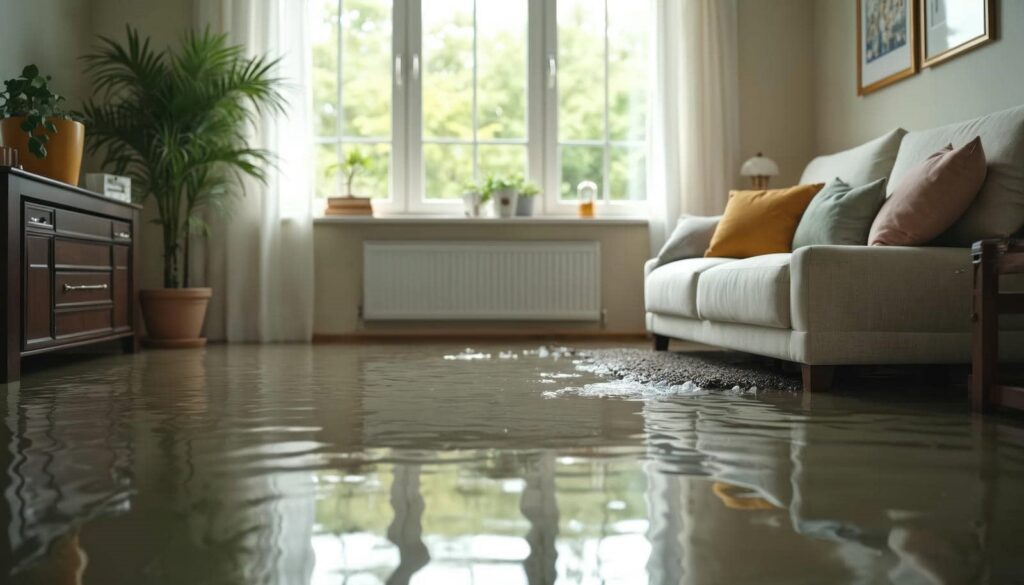
After storm flooding, the biggest damage often starts after the water stops rising. You need to assess each room fast, note contamination, and document what you see for insurance before you move anything. Then block more water entry, protect yourself, and remove standing water immediately. Dry hidden spaces next, because mold can begin in hours, and if the water’s dirty or deep, professional help may be the safest call.
Key Takeaways
- Check safety first: shut off power if safe, avoid contaminated water, and wear boots, gloves, eye protection, and a mask if needed.
- Assess flood damage room by room, photograph everything, and separate salvageable items from contaminated or clearly ruined belongings.
- Stop more water entry by blocking doors, windows, and vents, clearing gutters or roof breaches, and moving debris away from the home.
- Remove standing water quickly with pumps or wet vacs, then dry walls, floors, and cavities using fans, dehumidifiers, and moisture checks.
- Call professionals for severe flooding, sewage contamination, or rising water, because fast extraction and controlled drying help prevent mold and structural damage.
Assess Storm Flood Damage First
Before you start any emergency water removal, assess the storm flood damage first so you know what’s salvageable and what’s unsafe.
Walk through each room and note water depth, soaked materials, and visible contamination. Check walls, floors, outlets, and appliances for warping, stains, or debris.
You and your team should mark areas that need professional help and separate items you can clean from items you can’t.
During emergency water removal after storm flooding, this quick survey helps you avoid wasted effort and reduces health risks.
Take photos before moving anything, so you keep a clear record for claims and recovery.
If you smell sewage, see mud, or find broken glass, treat the space as hazardous and move with your crew’s safety first.
Stop Further Water Intrusion
Once you’ve sized up the damage, act fast to stop more water from getting in.
Shut off exterior sources first: clear clogged gutters, direct downspouts away, and patch obvious roof breaches with tarps or plastic sheeting.
If stormwater is forcing in through doors or windows, place sandbags, rolled towels, or boards to block the flow and seal gaps with tape if needed.
Move vehicles, patio items, and debris away from the structure so they don’t funnel water back toward it.
If safe, turn off sprinkler systems and close basement vents.
Keep an eye on changing rainfall and rising runoff, because conditions can shift fast.
Your crew works best when every minute stops another inch of intrusion.
A tight perimeter now means less extraction later and a faster recovery for everyone.
Protect Yourself Before Cleanup
Stormwater can hide sharp debris, sewage, and live electrical hazards, so you need to protect yourself before you start any cleanup.
You’re part of a team that stays safe by moving with discipline and checking your gear first. Wear sturdy boots, waterproof gloves, long sleeves, and eye protection.
If you smell gas, see sparks, or suspect energized wiring, step back and call professionals. Keep children and pets out of the area, and don’t touch contaminated water with bare skin.
- Shut off power only if it’s safe.
- Put on protective clothing before entry.
- Cover cuts and wash hands often.
- Use a mask when mold or sewage is present.
Remove Standing Water Fast
Pump out floodwater immediately with the right equipment so you can stop the damage from spreading.
Get standing water off floors and away from walls, trim, and subfloors to protect structural materials from swelling and rot.
Keep contaminated water contained as you work, and move it out fast so it doesn’t spread bacteria, debris, or sewage into clean areas.
Pump Out Floodwater
Swift action matters when floodwater enters your property, so remove standing water as soon as it’s safe to do so. You’ll move faster when you work like a team and follow a clear plan.
Shut off electricity before you start.
Use a submersible pump, wet vacuum, or sump pump to lift water out.
Discharge water away from your home and walkways.
Keep pumping until the space is clear, then check hidden pockets.
Wear gloves and boots, and watch for sewage, fuel, or sharp debris.
If the water level keeps rising, stop and call for help. Don’t wait for the area to dry on its own; you need fast removal to stay ahead of loss.
Protect Structural Materials
Once the standing water is out, you need to protect the structure right away, because soaked materials can warp, swell, and break down fast.
You should open wall cavities, lift baseboards, and pull wet insulation so framing and sheathing can start drying. Get fans and dehumidifiers running in the affected areas, and keep air moving across floors, trim, and subflooring.
If you act quickly, you’ll give your team the best chance to save drywall, wood, and finishes that are still recoverable.
Check for sagging ceilings, soft flooring, and swollen door frames, then mark damaged sections for repair.
Stay organized, work methodically, and focus on the parts that support the building first. Your crew can handle the rest once the structure is stabilized.
Limit Contamination Spread
While floodwater sits, it spreads contaminants, stains materials, and pushes moisture deeper into the structure, so you need to remove it as fast as possible.
You protect your team and property by acting in a tight sequence:
- Shut off unsafe utilities before entry.
- Pump or extract standing water from the lowest areas first.
- Remove soaked rugs, padding, and debris that trap bacteria.
- Sanitize affected surfaces and keep air moving to slow growth.
Work room by room, and bag contaminated materials for disposal.
If water reached sewage, chemicals, or unknown sources, wear proper PPE and isolate the area.
Fast removal limits odor, corrosion, and cross-contamination, and it helps your crew restore control with confidence.
Dry Walls, Floors, and Hidden Spaces
Once you’ve removed standing water, you need to dry walls, floors, and hidden spaces fast to stop damage from spreading.
Open wall cavities, use airflow and dehumidification, and keep moisture moving out of materials that hold water.
Check for hidden moisture behind trim, under flooring, and inside cavities so you can catch trapped water before mold starts.
Wall Cavity Drying
After storm flooding, you need to dry wall cavities, floors, and other hidden spaces quickly to stop mold, swelling, and structural damage. You’re not alone in this—every crew member on your side should move fast and stay methodical.
Open wet cavities where needed, remove baseboards, and create airflow through the wall assembly. Keep equipment running until materials are no longer damp to the touch.
- Remove soaked insulation that can’t dry well.
- Pull water from subfloors and crawl spaces.
- Use dehumidifiers and air movers together.
- Seal the area once surfaces are dry.
Work one zone at a time so you can protect the rest of the space. Clean, dry cavities help your whole property recover safely and stay solid.
Hidden Moisture Detection
Even when surfaces look dry, moisture can stay trapped in wall cavities, under flooring, and in other hidden spaces. You need to verify dryness, not guess.
Use a moisture meter on drywall, trim, baseboards, and subfloors, and compare readings with unaffected areas. Check behind cabinets, inside closets, under carpet edges, and around penetrations where water can linger.
Look for cool spots, swelling, staining, odors, and peeling paint. If readings stay elevated, keep the area open, increase airflow, and run dehumidifiers until levels match dry reference points.
Don’t reinstall materials too soon; hidden moisture can drive mold, rust, and structural damage. You and your team protect the space best when you inspect methodically, document findings, and stay patient.
Handle Contaminated Floodwater
When stormwater enters your property, treat it as contaminated until you know otherwise, because it can carry sewage, chemicals, bacteria, and debris. You’re not overreacting; you’re protecting your crew and your home.
Shut off electricity if water’s near outlets, panels, or appliances.
Wear boots, gloves, and eye protection before you step in.
Keep kids and pets out, and block off affected rooms.
Pump or bail only if the water source has stopped and you can discharge safely.
Use disinfectant on hard surfaces after removal, and wash exposed skin right away.
If you smell fuel, see dead animals, or suspect sewer backup, call professionals fast. Your team handles this best when you stay cautious, move methodically, and don’t touch anything you can’t clearly assess.
Save Belongings and Prevent Mold
Once the area is safe to enter, move fast to save what you can and stop mold before it starts.
Put on gloves and boots, then sort items into keep, clean, and discard piles. Carry out photos, documents, medicines, and electronics first.
Lift rugs, cushions, and mattresses so air can reach both sides. Open drawers, remove contents, and wipe surfaces dry.
If you can, place fans and a dehumidifier in the room to speed drying. Bag wet textiles separately and wash them quickly in hot water if safe.
Don’t stack damp items together; that traps moisture. Mark anything soaked by dirty water for disposal.
Stay methodical, work with your household, and keep a simple checklist so nothing important gets missed.
Call Water Removal Pros for Severe Damage
If floodwater has soaked walls, flooring, insulation, or electrical systems, call a professional water removal crew right away. You need fast extraction, controlled drying, and contamination handling to protect your home and your team.
Pros bring industrial pumps, moisture meters, and dehumidifiers that speed recovery.
- Stop further damage quickly.
- Remove hidden water from cavities.
- Reduce mold and structural decay.
- Document losses for claims.
Don’t wait for visible drying; storm water often hides in framing, under floors, and inside outlets.
When you bring in certified specialists, you join a crew that knows the drill and acts with you, not around you. That support helps you reclaim your space sooner and safer.
Frequently Asked Questions
How Long Does Floodwater Stay Contaminated After a Storm?
Floodwater stays contaminated for days or longer until you remove it and dry everything. You shouldn’t trust standing water after a storm; it often carries sewage, chemicals, and bacteria that keep spreading until cleanup is complete.
Can I Use a Regular Vacuum to Remove Floodwater?
No, you shouldn’t use a regular vacuum for floodwater. You’ll risk electric shock and damage. Use a wet/dry shop vac or professional extraction, then dry carpets and walls fast to curb mold.
What Should I Do if Sewage Mixed With Floodwater?
If sewage mixed with floodwater, you should evacuate contaminated areas, wear gloves and boots, shut off power, and call professionals. Don’t touch surfaces, discard porous materials, disinfect hard surfaces, and seek medical advice after exposure.
How Soon Should Insurance Be Contacted After Flooding?
Contact your insurer within 24 hours; many policies require prompt notice. About 14% of U.S. homeowners file water-damage claims yearly. You’ll protect your claim, speed recovery, and stay connected with your team.
Which Belongings Can Usually Be Saved After Flood Damage?
You can usually save hard, nonporous belongings like glass, metal, and sealed plastic, plus solid wood furniture if you dry it quickly. Toss heavily soaked mattresses, insulation, paper records, and items contaminated by sewage.
Final Thoughts
When storm flooding hits, you need to move like a firefighter at sunrise: fast, focused, and prepared. Check every room, stop more water at the door, suit up, and pull standing water out without delay. Then dry hidden spaces, handle contamination carefully, and save what you can before mold takes root. If the damage is heavy, call water removal pros. Your quick, decisive action can turn a disaster from a flood into a fix.