
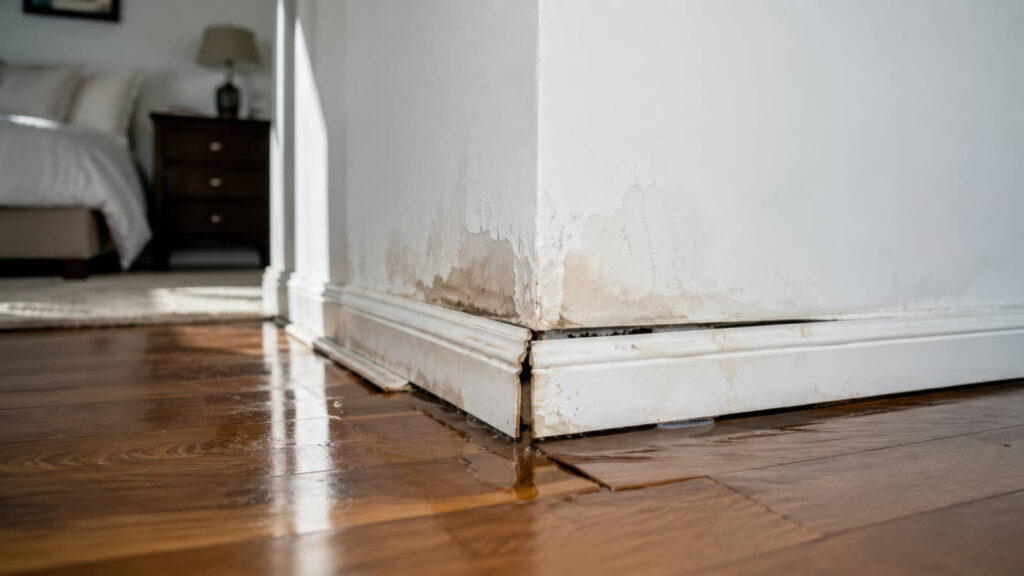
If wet drywall sits for even a short time, it can turn into a mold problem fast. You need to remove standing water, dry the area with fans and dehumidifiers, and inspect for soft spots, stains, and hidden moisture behind trim and outlets. Keep humidity below 60% and clean affected surfaces with detergent, but know when drywall has crossed the line and must be replaced.
Key Takeaways
- Act fast by removing standing water and running fans and dehumidifiers to dry wet drywall before mold can start.
- Check for damage such as dark stains, swelling, softness, sagging, or a cool spongy feel.
- Open windows only if outdoor air is drier, and remove baseboards to improve airflow along the wall.
- Use a moisture meter to find hidden dampness in seams, corners, and behind trim or outlets.
- Replace drywall that stays wet, sags, crumbles, or smells musty, and keep indoor humidity below 60%.
What Does Wet Drywall Look and Feel Like?
Wet drywall often looks darker, stained, or swollen, and it may sag or blister as moisture spreads through the material.
You can also notice soft spots, edge curling, or a chalky surface when you press it gently. The sheet may feel cool, damp, or spongy instead of firm.
If you hear cracking or see joint seams separating, the panel’s structure has started to weaken.
In water damage cleanup for wet drywall, you should inspect both visible faces and nearby trim for matching signs.
Trust your senses, but don’t overhandle the wall.
When you act early, you protect your space and stay aligned with others who respond fast and methodically.
Dry Drywall Before Mold Starts
Dry the drywall as soon as possible to limit mold growth and further deterioration. Remove standing water, then use fans and dehumidifiers to move dry air across the surface.
Open windows only if outdoor air is drier; otherwise, keep the area sealed. You can speed drying by removing baseboards and creating airflow at the wall’s lower edge.
Don’t paint, patch, or cover the wall until it’s fully dry. If drywall stays damp, cut out the affected section and replace it.
Work in clean, organized steps so you protect your home and support your crew.
- Run fans nonstop
- Use a dehumidifier
- Ventilate with dry air
- Remove trim for airflow
- Replace persistently wet drywall
How to Check for Hidden Moisture
To check for hidden moisture, don’t rely on the drywall’s surface alone. Use a pin or pinless moisture meter to test several spots around the affected area, including seams, corners, and baseboards.
Compare readings with dry material nearby so you can spot elevated levels fast. Check both sides of the wall if you can access them, and inspect insulation, studs, and trim for dampness.
Feel for coolness, softness, or swelling, which often signals water behind the paper face. If you hear a hollow sound when you tap, moisture may still be trapped.
Mark every wet zone so your cleanup team stays organized. When you verify hidden moisture early, you protect your home and move with confidence together.
When to Replace Wet Drywall
If moisture readings stay elevated after drying efforts, the drywall likely needs replacement instead of repair. You should also replace it when panels feel soft, swell at seams, or crumble at cut edges. Cut back to clean, solid material so your repair holds and your crew stays efficient.
- Persistent high moisture readings
- Visible sagging or delamination
- Mold staining or musty odor
- Soft, crumbling gypsum core
- Damage beyond minor surface wetting
When the board is soaked through, removed, and can’t regain structural integrity, patching won’t help.
In your cleanup plan, treat compromised drywall as a removal task, not a salvage job. That choice protects your space, keeps the work predictable, and helps you move forward with confidence.
Prevent Mold After Cleanup
After cleanup, you need to stop residual moisture from creating mold growth by drying the area completely and keeping indoor humidity low.
Run dehumidifiers and fans until drywall, framing, and insulation read dry on a moisture meter. Keep indoor humidity below 60%, and vent bathrooms, kitchens, and laundry areas.
Inspect behind baseboards, trim, and outlets for hidden dampness, then recheck daily for several days. If you smell musty odors or see discoloration, remove affected materials before spores spread.
Clean nearby surfaces with detergent, then sanitize only when the material allows it. Restore ventilation, fix leaks fast, and keep air moving so your home stays safe.
Frequently Asked Questions
How Soon Should Wet Drywall Cleanup Begin After Water Exposure?
You should begin cleanup immediately, ideally within 24 hours, because drywall absorbs moisture fast. You’ll reduce hidden saturation, limit demolition, and lower mold risk. Inspect, dry, and remove damaged sections quickly to protect your space.
Can Wet Drywall Be Saved Without Professional Equipment?
Yes, you can sometimes save wet drywall with fans, dehumidifiers, and removal of baseboards, but you’ll miss hidden saturation without professional meters. Act quickly, inspect carefully, and replace any soft, swollen, or moldy sections.
Does Insulation Behind Drywall Need Removal Too?
Yes—if insulation’s wet, you should remove it. Like a sponge hiding water, it traps moisture and feeds mold. You’ll need to inspect cavities, replace saturated insulation, dry framing, and restore your wall safely.
What Tools Help Detect Moisture Behind Walls?
You’ll use a moisture meter, thermal imaging camera, and inspection holes to find hidden dampness behind walls. You can also check with a hygrometer and infrared thermometer, then confirm readings by probing suspicious drywall areas carefully.
How Long Does Drywall Drying Usually Take?
Drywall usually dries in 2–5 days, but you’ll need to compare surface dryness with hidden moisture. Use fans, dehumidifiers, and moisture meters; if readings stay high, you’ll remove damaged sections and dry again.
Wrap-Up
Act fast, and you stop damage before it spreads. If your drywall feels soft, shows stains, or holds hidden moisture behind trim or outlets, dry it with fans, dehumidifiers, and airflow now. Remove and replace panels that stay wet or crumble. Keep humidity below 60%, clean affected surfaces, and inspect every corner. Wet drywall doesn’t wait, and neither should you. Dry it, check it, fix it, or mold may move in.