
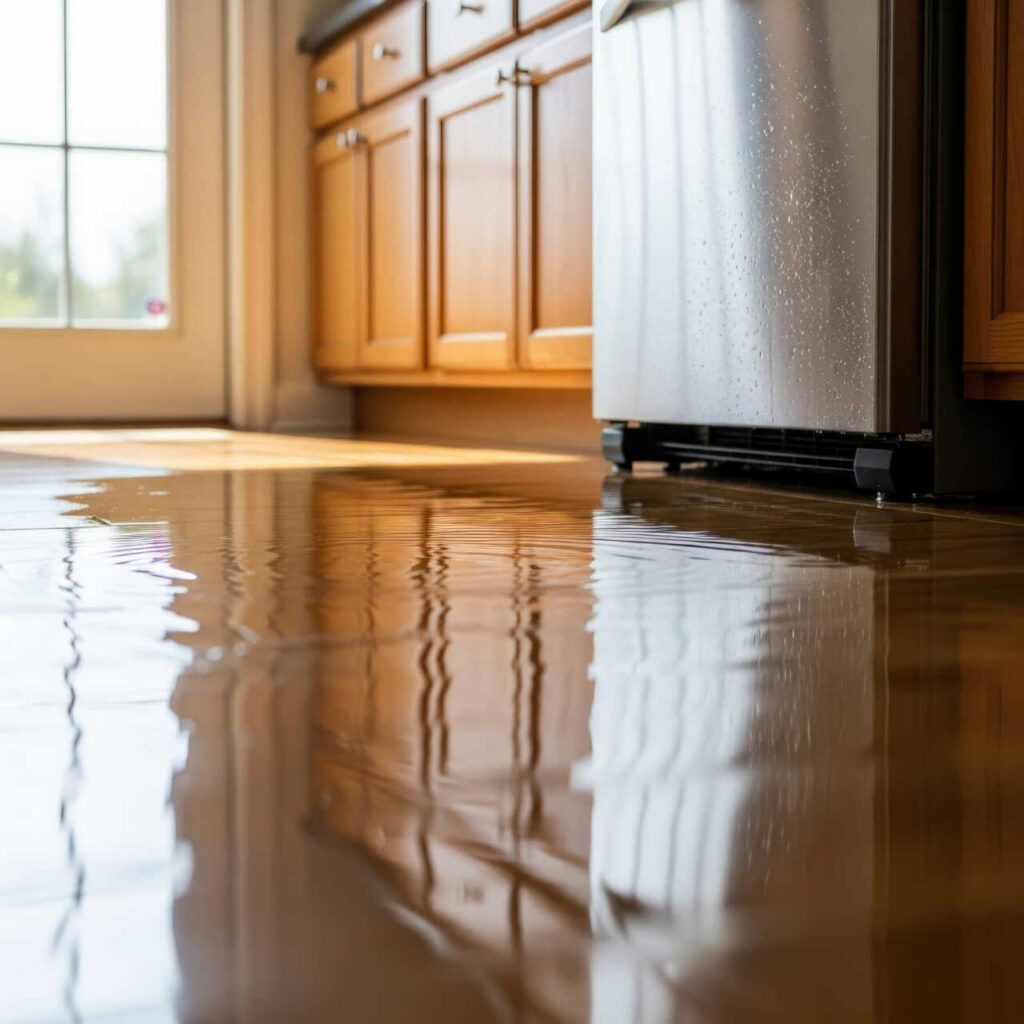
Just when a sudden leak hits and you’re already short on time, you need a clear plan. You stop the source, move vulnerable items, and remove standing water before it spreads. Then you dry walls, floors, and furniture while checking for hidden damage that can turn into mold or structural issues. Knowing which materials to remove and when to call pros can change the outcome.
Key Takeaways
- Shut off the water source immediately and cut electricity near the leak for safety.
- Remove standing water with towels, mops, a wet vacuum, or a sump pump.
- Move wet items, rugs, and furniture to a dry area and keep pathways clear.
- Increase drying with fans, open windows, and a dehumidifier to limit further damage.
- Inspect for hidden moisture, warping, stains, or musty odors, and call professionals if needed.
What To Do Right After A Sudden Leak
When a sudden leak starts, you should act fast to stop the water from spreading and limit damage. Stay calm, and begin emergency water damage cleanup after leak signs appear by checking the affected area for standing water, soaked materials, and unsafe surfaces.
Use towels, mops, or a wet vacuum to remove visible water quickly, and keep your movements controlled. Remove lightweight items that can absorb moisture, such as rugs or cushions, and place them in a dry, ventilated spot.
Open interior doors to improve airflow, and if it’s safe, run fans to speed evaporation. Document the damage with photos for your records.
Stop The Leak And Protect Nearby Areas
Shut off the water at the source as soon as you can, and close the nearest supply valve or main shutoff to stop the leak from feeding more water into the area.
Next, check adjacent rooms and nearby fixtures for moisture migration, especially baseboards, cabinets, and wall edges. You can move rugs, paper, electronics, and other vulnerable items to a dry zone, keeping pathways clear for safe access.
If water is near outlets or powered devices, cut electricity to that circuit before you touch anything else.
Close doors to contain the affected space and limit airflow that can drive moisture deeper into materials. Use towels or absorbent barriers at thresholds to protect clean flooring.
When you act quickly and calmly, you help your home stay stable, and you give your household a better chance to recover with less damage.
How To Clean Up Standing Water Fast
Standing water needs to come out fast, so start with the most efficient removal method you have on hand. Use a wet/dry vacuum, a sump pump, or a sturdy mop and bucket to remove as much water as possible without spreading it.
Work from the outer edge toward the center to keep runoff contained. If the water is deep, move in sections and empty equipment often so suction stays strong.
- Wear gloves and slip-resistant shoes
- Keep electrical cords and outlets clear
- Use towels to capture thin pools at edges
Check hidden pockets under cabinets and along baseboards, because trapped water can keep migrating.
You’re handling this the right way when the surface stops shining and only a thin film remains.
Dry Walls, Floors, And Furniture Quickly
Once standing water is removed, you need to dry wet surfaces immediately to limit swelling, staining, and hidden moisture buildup.
Open windows if weather allows, then run fans to move air across walls, floors, and furniture. Set a dehumidifier in the affected room to pull vapor from the air and speed evaporation.
Remove cushions, rugs, and small items so each surface can breathe. For wood furniture, wipe along the grain with clean towels, then separate drawers and doors.
Lift carpet edges only if you can do it safely. Keep airflow steady and check surfaces often.
You’re not doing this alone; a quick, orderly response helps your home recover faster and reduces the chance of lasting damage.
Signs Of Hidden Water Damage
Even after visible water is gone, hidden damage can keep spreading behind walls, under flooring, and inside cabinets. You can spot it by watching for subtle changes in your space that don’t match normal drying.
Check these signs early so you can act with confidence and feel supported:
- Soft, swollen baseboards or trim
- New stains, bubbling paint, or warped flooring
- Musty odors, cool wall sections, or damp cabinet backs
You may also notice doors sticking, squeaky floors, or discoloration around outlets and seams.
These clues often mean moisture remains trapped in materials you can’t see. If you catch them quickly, you’ll protect your home’s structure and keep the cleanup process controlled.
Trust your senses, document what you find, and stay alert for changes over the next 24 hours.
Remove Wet Materials Before Mold Starts
You should remove saturated drywall as soon as you confirm it’s beyond drying, because trapped moisture can accelerate mold growth and weaken the wall assembly.
Next, extract wet insulation so you don’t leave hidden damp pockets that can hold moisture against framing and sheathing.
Dispose of damaged flooring promptly, since swollen or delaminated materials can’t reliably dry and may continue to spread contamination.
Remove Saturated Drywall
Cut out saturated drywall as soon as possible after a leak, because wet gypsum loses structural integrity and can trap moisture behind the wall. You’ll protect the room’s drying path and reduce the chance of hidden deterioration.
Use a utility knife to score clean lines, then remove affected sections to the nearest stud or seam. Wear gloves, eye protection, and a mask while you work, and keep the area ventilated.
- Mark all damp areas before cutting
- Remove only compromised drywall panels
- Bag debris immediately to limit spread
If the wall feels soft or stains keep growing, stop and assess the source. Acting quickly helps you stay ahead of mold, and you’re not alone in handling it.
Extract Wet Insulation
Pull out soaked insulation as soon as the wall cavity is open, because wet fiberglass, cellulose, or foam can hold moisture against framing and speed up mold growth.
You’ll want to work from the clean edge toward the leak source, bagging material as you go to limit airborne fibers and dust. Wear gloves, eye protection, and a respirator if fibers are loose.
Check nearby studs, plates, and sheathing for dampness, then wipe or dry them so the cavity can breathe. If insulation feels cool, heavy, or clumped, remove it completely; partial drying usually leaves hidden moisture behind.
You’re not overreacting—you’re protecting the structure and helping your cleanup team restore a healthy, dry space quickly and confidently.
Dispose Damaged Flooring
With the wall cavity cleared and drying underway, wet flooring needs the same fast response. You should remove saturated carpet, pad, vinyl, laminate, or underlayment before moisture locks in and mold colonizes.
Work from the perimeter inward, cut materials into manageable sections, and bag debris immediately to keep spores and contaminants from spreading through your home.
- Lift flooring that feels soft, swollen, or delaminated.
- Check subflooring for staining, odor, or retained moisture.
- Discard porous materials that can’t dry within 24–48 hours.
You’re protecting the whole space, not just one room.
When you act quickly and methodically, you give your home the best chance to dry cleanly, stay structurally sound, and feel safe again.
When To Call Water Damage Pros
You should call water damage pros if you see visible structural damage, such as sagging ceilings, warped floors, or cracked walls.
If moisture keeps returning after cleanup or materials stay damp, hidden saturation may still be present.
A prompt professional response can limit further damage and help you restore the affected areas safely.
Visible Structural Damage
Warped floors, sagging ceilings, cracked drywall, or bowed framing are clear signs that water has already reached structural materials and needs professional attention. You shouldn’t treat these changes as cosmetic; they signal load-bearing stress and possible hidden failure.
When you call water damage pros, you get a trained team that can assess the affected area, stabilize materials, and plan targeted cleanup before the damage spreads further. You’re not overreacting—you’re protecting your home and everyone in it.
- Check for visible deflection in floors, joists, or ceiling planes.
- Look for fractures that run along seams, corners, or fasteners.
- Request immediate structural evaluation when movement appears.
Quick action helps you stay in control and keeps your space safer while experts restore it.
Persistent Moisture Issues
If damp spots keep returning after a leak, the problem likely extends beyond the visible surface and needs professional water damage cleanup.
You may have trapped moisture in drywall, insulation, subflooring, or framing, and that hidden water can keep feeding mold, warping materials, and weakening structure.
You should call water damage pros when moisture readings stay elevated, odors persist, or surfaces dry unevenly. They use thermal imaging, moisture meters, and targeted extraction to find what you can’t see.
Then they dry affected areas with controlled airflow and dehumidification, helping you protect your space and feel confident again.
When you act quickly, you join the people who stop damage early, preserve materials, and restore a healthy home environment before the leak becomes a larger, costlier problem.
How To Prevent Future Leaks
To prevent future leaks, inspect plumbing joints, supply lines, appliances, and roof penetrations on a regular schedule so you can catch deterioration before it causes water intrusion.
You’ll protect your space when you tighten loose fittings, replace brittle hoses, and seal cracked flashing promptly. Keep drains clear and watch for condensation around fixtures, because trapped moisture can mimic a leak and hide a real one. Your home stays safer when you document inspections and test shutoff valves.
- Check under sinks and behind appliances monthly.
- Replace washer hoses every five years.
- Recaulk tubs, showers, and exterior penetrations as needed.
If you notice staining, warped materials, or a musty odor, act quickly. Early intervention helps your household stay resilient, comfortable, and confident.
Frequently Asked Questions
How Do I Document Water Damage for an Insurance Claim?
Photograph every damaged area, list affected items, save receipts, and record dates, times, and leak sources. You’ll support your claim by noting moisture readings and cleanup steps, giving your insurer clear, organized evidence.
Can I Safely Use a Regular Vacuum on Wet Carpets?
No—you can’t safely use a regular vacuum on wet carpets; it’s like plugging a toaster into a puddle. You’ll risk shock, damage, and mold. Use a wet/dry extractor and ventilate right away.
How Long Does It Take for Water Damage Odors to Appear?
Water damage odors can appear within 24 to 48 hours, sometimes sooner in warm, humid conditions. You should dry affected areas quickly, because fast action helps you prevent microbial growth, limit spread, and protect your home.
Should I Turn off Electricity Before Entering the Flooded Area?
Yes, you should turn off electricity before entering if water may contact outlets, appliances, or wiring. You’ll protect yourself, then check from a dry location or call a licensed electrician if you’re unsure.
What Items Can Be Salvaged After a Sudden Leak?
Like flowers after rain, you can salvage hard, nonporous items, sealed wood, metal, glass, and some plastics if you dry them fast. You’ll usually need to discard soaked insulation, drywall, carpet, and food.
Summary
You’ve acted fast, and that’s the difference between a small leak and a major loss. Stop the water, clear standing moisture, and dry every surface thoroughly; water left behind is a silent threat. Check for hidden damage, remove soaked materials, and call pros when needed. Then prevent the next leak before it starts. In water damage cleanup, speed isn’t just helpful—it’s everything.