
Key Takeaways
- Check for hazards first: downed power lines, gas leaks, structural damage, and rising water before entering flooded areas.
- Shut off electricity, gas, and water only if the controls are safely accessible and the area is dry.
- Wear protective gear such as waterproof boots, gloves, eye protection, and a respirator during cleanup.
- Photograph and document all damage before removing items, and keep records for insurance claims.
- Discard contaminated materials, watch for mold, and call professionals for severe damage or sewage contamination.
Check Safety Before Entering Flooded Areas
Before you enter any flooded area, you need to check for immediate hazards that could threaten your safety. Stop at the perimeter and look for downed power lines, gas leaks, structural cracks, and unstable flooring.
If water is moving, rising, or mixed with sewage, don’t go in. Wear insulated boots and gloves, and keep children and pets away. Turn off utilities only if you can reach switches without standing in water.
Photograph obvious damage from a safe distance, since you’ll need clear records when you plan how to clean up after flood damage.
If you smell fuel, hear hissing, or see bulging walls, leave and call emergency services. Your crew’s safety comes first, and careful checking helps everyone work together with confidence.
Start Flood Cleanup the Right Way
Before you start cleanup, assess the area for hidden hazards, structural instability, and contaminated water.
Shut off electricity, gas, and water at the main controls if it’s safe to do so.
Then document all damage with clear photos and notes before you remove or discard anything.
Assess Safety First
If floodwater has entered your home, stop and assess the area for electrical hazards, structural damage, gas leaks, and contamination before you start any cleanup.
Look for standing water near outlets, frayed cords, sagging ceilings, warped floors, and cracked walls. If you smell fuel or see visible damage, leave the area and keep others out.
Wear waterproof boots, gloves, eye protection, and a respirator rated for mold and fine debris. Assume floodwater is contaminated with sewage, chemicals, and sharp debris.
Test stable surfaces before you step, and avoid leaning on damaged structures. Document hazards with photos for your records.
When you take this first step carefully, you protect yourself and help your household recover with confidence and control.
Shut Off Utilities
Once you’ve confirmed the area is safe enough to enter, shut off the main power, gas, and water supplies if you can reach them without exposure to standing water or damaged equipment.
If the electrical panel is wet, stay back and call your utility company or a licensed electrician. Use a flashlight, not candles, and never touch switches or outlets with damp hands.
If you smell gas, leave immediately and contact the gas provider from outside. Close the water main to limit additional flooding, but don’t force valves that are stuck or corroded.
Tell everyone in your household that utilities are off so no one re-energizes a hazardous system. These steps protect you, your home, and the crew you may bring in next.
Document Damage Thoroughly
After the area’s safe and utilities are shut off, document every room, surface, and damaged item before you move or discard anything.
Use your phone or camera to take wide shots, close-ups, and angle shots that show water lines, debris, warped materials, and stained contents.
Include timestamps if your device allows them, and capture serial numbers on appliances, electronics, and equipment.
Write a simple inventory with room names, item descriptions, estimated age, and visible damage.
Keep damaged samples, labels, and receipts in one dry folder or bag.
If you’re part of a shared household, make copies for everyone and store backups in cloud storage.
Clear records help you stay organized, support insurance claims, and give your recovery team the facts they need to help you move forward.
Toss Damaged Items and Disinfect Surfaces
Sort through water-damaged belongings and discard anything that can’t be safely cleaned and dried, such as soaked drywall, insulation, carpet padding, food, and porous items that may hold contaminants.
Wear gloves and an N95 if dust or mold is present, then seal waste in heavy bags so you don’t spread debris through shared spaces.
- Remove items with visible mold, sewage, or foul odors.
- Keep salvageable goods separate from trash.
- Wash hard surfaces with soap and clean water first.
- Apply a disinfectant labeled for flood cleanup.
- Follow the contact time on the label, then rinse if required.
Disinfect countertops, cabinets, and tools you’ll reuse, and replace cloths often.
If you’re working with neighbors or family, set a clear disposal area so everyone stays organized and safe.
Dry Walls, Floors, and Furniture
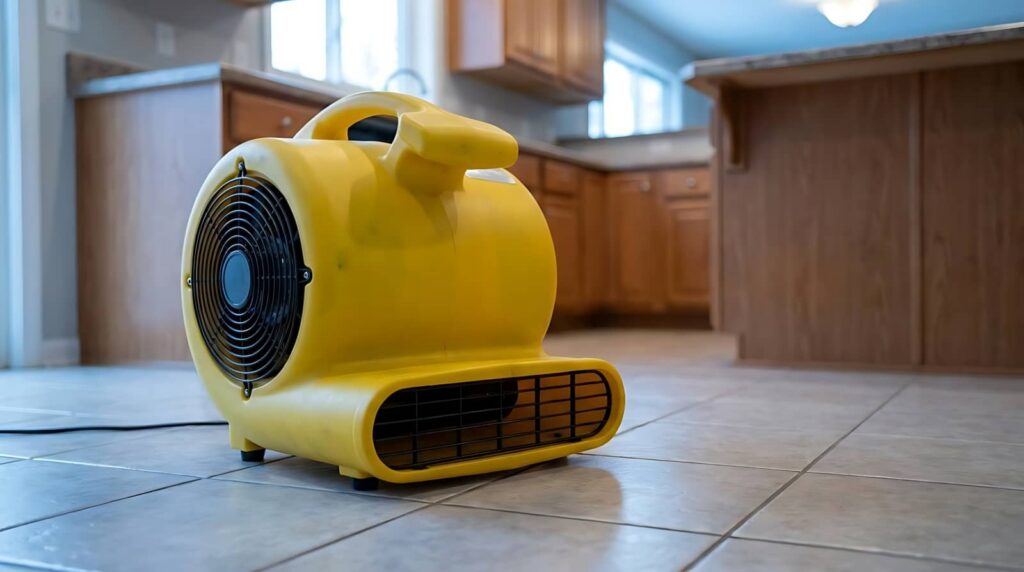
You should dry walls as quickly as possible to limit mold growth and structural damage, using fans, dehumidifiers, and open airflow.
Remove baseboards and check insulation if moisture remains trapped behind wall surfaces.
For furniture, dry each piece safely with gentle airflow and avoid direct heat that can warp wood, crack finishes, or spread hidden moisture.
Dry Walls Quickly
If floodwater has already been removed, dry walls, floors, and furniture as quickly as possible to limit swelling, warping, and mold growth. Open interior doors, remove baseboard if needed, and run fans and dehumidifiers to move air through the structure.
You’ll work best when you keep humidity low and inspect materials daily for damp spots.
- Use box fans to create cross-ventilation
- Set dehumidifiers in the driest rooms first
- Lift wet rugs so air reaches the floor
- Pull away soaked drywall insulation only if exposed
- Check hidden cavities for lingering moisture
Stay alert for discoloration, soft drywall, or musty odor, since these signal trapped water.
If a surface stays wet after 48 hours, treat it as a mold risk and get help from a qualified restoration professional.
Dry Furniture Safely
Before you move furniture back into place, dry each piece thoroughly to prevent swelling, cracking, mildew, and hidden mold.
Move items into a clean, ventilated area and separate cushions, drawers, and removable panels so air can reach every surface. Blot standing water with absorbent towels, then use fans and a dehumidifier to keep air moving around and under the furniture.
For wood, wipe gently, lift it off wet flooring, and dry joints slowly to reduce warping.
For upholstered pieces, remove fabric covers if you can and dry the padding completely. Don’t use direct heat, which can damage finishes and trap moisture inside.
If you smell musty odor or see soft spots, call a restoration professional so your home crew stays safe and supported.
Avoid These Flood Cleanup Hazards
Flood cleanup can expose you to serious hazards, so prioritize safety from the start. You’re part of a community of homeowners who can reduce risk by avoiding common mistakes.
Watch for:
- Standing water that may hide sharp debris or contaminants
- Electrical shock from outlets, cords, or appliances
- Mold exposure in damp drywall, insulation, and carpets
- Heavy lifting that can strain your back or joints
- Bleach mixed with ammonia or other cleaners
Wear boots, gloves, eye protection, and a respirator if dust or mold is present.
Turn off power before entering wet areas, and use tools with insulated handles. Keep children and pets away from contaminated zones.
Work slowly, document hazards, and discard porous materials that stay saturated. Safe habits help you protect your space and your people.
When to Call Flood Restoration Experts
Call flood restoration experts when the water is contaminated, the damage is extensive, or hidden moisture may still be trapped in walls, floors, or insulation.
You should also call them if sewage, chemicals, or floodwater reached electrical systems, HVAC units, or structural framing.
Their equipment measures moisture, removes saturated materials, and speeds drying before mold can spread.
You stay safer when trained technicians handle demolition, sanitation, and air control, especially if you smell mustiness or see warped finishes.
If your home needs permits, insurance documentation, or microbial testing, experts can coordinate those steps and reduce delays.
By bringing in a qualified team early, you protect your property, your health, and your recovery timeline.
Your household doesn’t have to manage this alone.
Frequently Asked Questions
How Can I Tell if Floodwater Is Contaminated?
You can’t tell by looks alone; assume floodwater’s contaminated if it’s from sewers, rivers, or streets, smells foul, or leaves debris and discoloration. Wear protection, avoid contact, and test water if you’re unsure.
What Supplies Should I Gather Before Starting Cleanup?
You’ll need 10% bleach, heavy-duty gloves, N95 respirator, goggles, boots, trash bags, buckets, mops, detergent, and disinfectant; flood cleanup often exposes you to contaminated water, so gather everything before you start.
Can I Save Food Exposed to Floodwater?
No, you can’t safely save food exposed to floodwater. You should discard canned goods with damaged seals, all perishables, and any food in porous packaging. Wash unaffected sealed items only after thorough sanitizing.
How Do I Dispose of Moldy Household Items?
You’ll bag moldy items in heavy-duty plastic, seal them, and haul them to curbside trash or a landfill-approved site. Don’t sort them like a Victorian archivist; wear gloves, mask, and protect your crew.
Should I Contact My Insurer Before Cleanup?
Yes, you should contact your insurer before cleanup. You’ll document damage, confirm coverage, and avoid mistakes that could complicate claims. Take photos, keep receipts, and follow their instructions before you discard anything.
Summary
By checking for hidden hazards first, you set yourself up for a safer recovery. Handle cleanup with care, discard items that can’t be saved, and disinfect every affected surface. Dry the space quickly to limit further trouble, and stay clear of risky conditions like mold, sewage, or unstable structures. If the damage feels too great, don’t hesitate to bring in restoration experts. A measured approach helps you return to normal with fewer surprises.